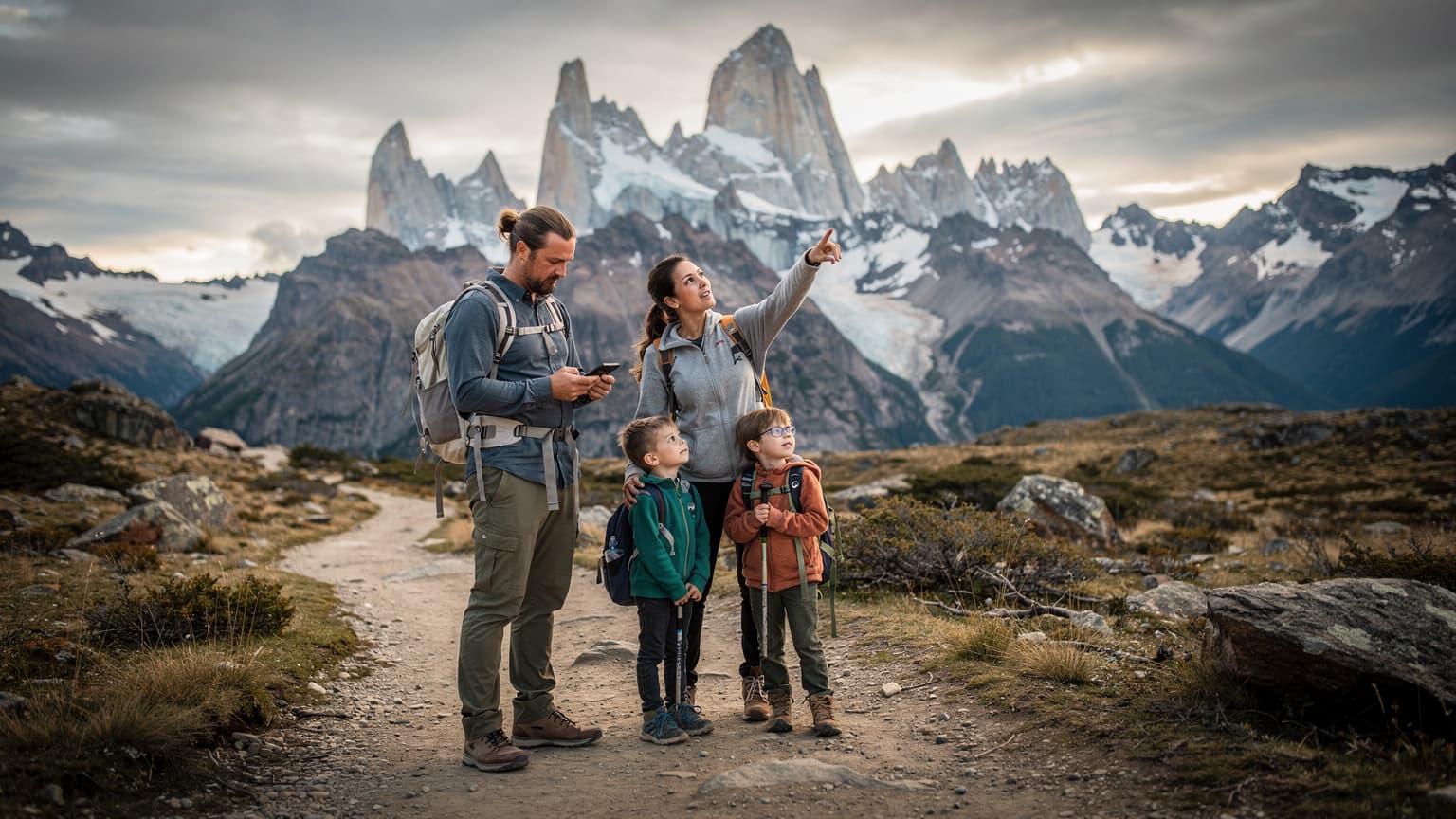

Mount Toubkal with Kids: The Ultimate Parental Prep
Mount Toubkal, North Africa's highest peak, offers an unparalleled adventure, but taking on this challenge with children aged 4-12 requires a level of preparation that goes beyond packing hiking boots and trail mix. As a veteran of thirty countries with my own two adventurers in tow, I know the drill: planning is less about the destination and more about anticipating every possible hiccup, from a scraped knee to a sudden data drought.
For us, scaling Toubkal in 2026 is about more than just the summit; it's about the journey, the cultural immersion in Berber villages like Imlil, and creating lasting family memories, all while keeping a tight leash on safety. This means meticulous planning for connectivity, especially when you have kids who might need a quick YouTube Kids distraction or, more importantly, a way to reach you if they wander off (even just for a moment at a bustling souk in Marrakech).
Why Connectivity is Non-Negotiable for Family Treks
When you're far from home, especially in a place like the High Atlas Mountains where terrain can be unpredictable, reliable communication isn't a luxury, it's a lifeline. I've learned that a solid data plan allows for real-time weather updates, GPS tracking for our route, and instant communication with our local guide. For the kids' devices, it's about making sure their pre-loaded apps, like Duolingo Kids or a few episodes of Bluey on Disney+, remain accessible, even if only via a shared hotspot from my phone.
Consider those moments of sheer boredom or exhaustion that can strike even the most intrepid young traveler. A quick burst of connectivity, carefully managed, can be a sanity saver. My own kids, currently 8 and 10, are past the toddler phase, but their need for digital comfort remains. We're talking about making sure their iPads can stream Disney+ for an hour during downtime at a gîte, which requires a surprisingly robust data plan. Trust me, paying for a huge hotel bill for a kid's menu is far less painful than dealing with a digitally deprived child at 8,000 feet.
Packing for Peace of Mind, Beyond the Basics
Beyond the typical gear list, my family travel packing always includes a few tech essentials that ensure connectivity and entertainment. These aren't just for emergencies, though they serve that purpose too; they're for managing the daily rhythm of family travel. This includes robust power banks, multiple charging cables (because someone always forgets theirs), and a waterproof case for my primary device. I also make sure we have a portable Wi-Fi hotspot in our kit, just in case my phone's hotspot isn't cutting it for all the devices.
The iPhone 17 eSIM Advantage for Moroccan Peaks
The iPhone 17, with its advanced eSIM capabilities, is a game-changer for international travel, especially for challenging destinations like Mount Toubkal. Gone are the days of fumbling with tiny physical SIM cards in a dusty, dimly lit airport terminal or worrying about losing your home SIM. The integrated eSIM means you can provision a local Moroccan data plan digitally, often before you even leave home.
Seamless Activation and Multi-Line Management
One of the biggest reliefs for a family planner is seamless activation. Imagine landing in Marrakech after a long flight, kids already antsy, and needing to connect. With an eSIM, you simply activate your pre-purchased plan via a QR code or app, and you're good to go. No searching for local SIM card vendors, no language barriers, no unexpected data charges. It's a huge time-saver and stress reducer, letting you focus on getting the family settled.
The iPhone 17's ability to manage multiple eSIM profiles is also invaluable. I can keep my primary number active for critical calls (like with our trekking agency) while simultaneously running a dedicated data eSIM for Morocco. This separation is fantastic for parental-control features, allowing me to monitor data usage specifically for the kids' devices tethered to my phone, without impacting my main line.
Enhanced Security and Durability in Rugged Environments
Physical SIM cards are small, fragile, and easily lost or damaged, which is the last thing you want when you're halfway up a mountain. The eSIM, being embedded, eliminates this risk entirely. It's more secure, too, as it can't be physically removed if your phone is lost or stolen. For an adventure like Toubkal, where dust, moisture, and rough handling are par for the course, this added durability is a significant advantage.
Furthermore, the iPhone 17's robust build quality, combined with its advanced cellular modem, means you're more likely to maintain a connection in challenging conditions. While no phone can guarantee 100% coverage at the absolute summit of Toubkal, the latest iPhone models tend to have superior antenna performance, which can make all the difference when you're trying to send that vital message or check your position.
Choosing the Right eSIM Plan for Your Family Trek
Selecting an eSIM plan for Morocco, especially with a family in tow, requires a bit more thought than just picking the cheapest option. You need to consider data allowances for multiple devices, coverage in remote areas, and the duration of your trip. My priority is always a plan that offers generous data and reliable service from reputable providers.
Data Plan Sizing: The Disney+ Dilemma
Let's be real, two kids streaming Disney+ (even just for an hour or two on a rainy afternoon at the gîte) can chew through data faster than a goat through a Berber tent. A single standard movie can be 1-3 GB, and multiple episodes add up quickly. For my family, I typically budget at least 10-15 GB per child, per week, if I expect any significant streaming. If it's just for maps, messaging, and light browsing, you can go a bit smaller, but I always err on the side of more data when traveling with kids.
| Provider | Data Allowance | Validity | Estimated Cost (USD) | Best For |
|---|---|---|---|---|
| Local Moroccan Provider (e.g., Maroc Telecom) | 20 GB | 30 Days | $25 | Heavy data users, long stays, local rates |
| Regional eSIM (Africa) | 10 GB | 15 Days | $30 | Multi-country trips, moderate use |
| Global eSIM | 5 GB | 7 Days | $20 | Short trips, light data use, emergency backup |
Coverage in the High Atlas: What to Expect
While major cities like Marrakech will have excellent 4G/5G coverage, as you ascend into the High Atlas, signal strength can become patchy. Maroc Telecom generally has the widest coverage in Morocco, extending into many rural and mountainous areas, including parts of the Toubkal trek. However, don't expect continuous high-speed data at the summit or in deep valleys. The key is to have a plan that leverages the best available local network.
Always check the specific coverage maps of the local partner network for your chosen eSIM provider before you commit. Some providers offer multi-network access, which can be a lifesaver in these more remote regions. Having a multi-country eSIM can also be a good backup for other adventures, like a summer road trip across Europe, ensuring seamless connectivity.
Pre-Trip eSIM Setup: A Step-by-Step Guide for iPhone 17
Getting your eSIM ready before you depart is crucial for a smooth start to your Moroccan adventure. There's nothing worse than trying to troubleshoot connectivity issues with jet-lagged children clinging to your legs. Here's how I approach it for my iPhone 17.
Purchasing Your Morocco eSIM
First, head to the eSIM for Morocco page on our site. I usually purchase my eSIM a few days before departure. This gives me enough time to activate it, test it, and resolve any potential issues while still in my home country, where I have stable Wi-Fi and easy access to customer support. Always read the plan details carefully, paying attention to the validity period and data allowance.
| eSIM Type | Benefit | Consideration |
|---|---|---|
| Data-Only eSIM | Cost-effective for internet, WhatsApp calls | No local phone number, relies on VoIP for calls |
| Data + Local Number eSIM | Full local connectivity, easier for local bookings | Slightly higher cost, fewer providers offer this |
| Regional (Africa) eSIM | Covers multiple countries, convenient for wider tours | May have slightly less optimized local coverage than a single-country eSIM |
Activating Your eSIM on iPhone 17
The activation process for an eSIM on an iPhone 17 is generally straightforward. You'll typically receive a QR code via email after purchase. Make sure your iPhone is connected to Wi-Fi for this step.
- Open Settings: Tap on the 'Settings' app on your iPhone.
- Navigate to Cellular/Mobile Data: Select 'Cellular' or 'Mobile Data,' depending on your region's terminology.
- Add eSIM: Tap 'Add eSIM' or 'Add Data Plan.'
- Scan QR Code: Choose 'Use QR Code' and scan the QR code provided in your purchase confirmation email. Your iPhone will detect the new plan.
- Label Your Plans: Once added, you'll be prompted to label your cellular plans. I usually label my home plan 'Primary' and the travel eSIM 'Morocco Travel' for easy identification. This is crucial for managing which line is used for what purpose.
- Set Default Line: Choose your 'Morocco Travel' eSIM as your default line for cellular data. You can keep your primary line for calls and texts, or switch it off completely to avoid roaming charges.
Before you even leave your living room, you'll have a fully functional Moroccan data plan. Test it out by turning off Wi-Fi and trying to browse a website or send a message. This peace of mind is invaluable.
Data Management on the Trail: Keeping the Family Connected and Safe
Once you're on the trail, managing your data efficiently becomes key. While an eSIM provides freedom, judicious use helps preserve battery life and ensures you have connectivity when it truly matters. This is where those parental controls and a good understanding of your devices come into play.
Hotspotting for the Whole Crew
My iPhone 17 often doubles as the family Wi-Fi hub. I can enable Personal Hotspot to share my eSIM's data with the kids' iPads or even my partner's phone. This is fantastic for those moments at a rest stop or in the evenings at the gîte when everyone wants to check in, or when the kids need to unwind with a bit of Minecraft online (yes, even in the Atlas Mountains, it happens). Just remember that hotspotting can drain your iPhone's battery faster than usual, so keep that power bank handy.
Parental Control Features that Work with eSIM
This is where the iPhone's built-in Screen Time features truly shine. I can set daily time limits for specific apps like YouTube or Safari on the kids' devices, even when they're tethered to my eSIM. More importantly, I can restrict content, prevent in-app purchases (a silent wallet drain I've learned to dread), and even approve app downloads remotely. This works seamlessly with the eSIM data, giving me control over their digital diet without needing a separate Wi-Fi network.
"The ability to manage data usage and content on multiple devices from my own phone, regardless of where we are, is a game-changer. It means I can focus on the trail, not on policing screen time."
Offline Maps and Emergency Features: Your Digital Safety Net
While an eSIM provides fantastic connectivity, relying solely on live data in remote mountain regions is risky. Always prepare for periods without signal. This is where offline maps and your iPhone's emergency features become your ultimate safety net.
Essential Offline Apps for Mount Toubkal
Before we even think about heading out, every device, including the kids' iPads, has these apps pre-loaded and pre-downloaded with relevant content:
- Maps.me or Organic Maps: Download the entire Morocco map, specifically the High Atlas region. These apps work entirely offline, providing detailed topographical information, trails, and points of interest.
- AllTrails or Gaia GPS: If you're using a specific hiking app, ensure your Toubkal route is downloaded for offline navigation. Many of these apps also allow you to download trail details, photos, and comments.
- Google Translate: Download the French and Arabic language packs for offline use. This is incredibly helpful for communicating with local guides or villagers when signal is nonexistent.
- Weather App: While not fully offline, many weather apps allow you to cache forecast data for several days. Check before you head into signal-free zones.
- Entertainment: Remember those Disney+ downloads? Make sure they're actually downloaded to the device, not just marked for offline viewing, especially for long travel days or unexpected delays.
iPhone 17 Emergency SOS and Satellite Connectivity
The iPhone 17 is expected to further enhance its Emergency SOS via Satellite feature. This is a crucial safety component for any remote trekker. In areas without cellular or Wi-Fi coverage (which you will encounter on Toubkal), this feature allows you to send emergency messages to rescue services. It's not a replacement for a satellite communicator, but it's an incredible backup.
Familiarize yourself with how to activate this feature before you leave. It requires a clear view of the sky and can take a few minutes to connect, but in a true emergency, those minutes are invaluable. Always remember to inform someone reliable of your itinerary, even if it's just a trusted friend or family member back home, before you embark on any remote section of your trek.
Managing Kid Devices and Screen Time in the Wild
Traveling with children means navigating the delicate balance between digital entertainment and real-world engagement. My philosophy is not to ban screens entirely but to manage them strategically. An eSIM plays a surprisingly vital role in this.
Curating Content for Offline Enjoyment
Before any major trip, especially one involving long flights or periods away from Wi-Fi, I go into full content-curation mode. This means:
- Downloading Movies & Shows: On apps like Disney+, Netflix, or Apple TV, I make sure a good selection of movies and shows are downloaded directly to the kids' iPads.
- Offline Games: We look for games that don't require an internet connection after the initial download, like Toca Boca apps or Monument Valley.
- Audiobooks & Podcasts: For moments when visual stimulation isn't ideal (like a bumpy car ride), downloaded audiobooks from Audible or podcasts from Spotify Kids are fantastic.
- Educational Apps: Apps like Khan Academy Kids or National Geographic Kids have offline modes and offer a great way to sneak in some learning.
The beauty of a robust eSIM plan is that if we unexpectedly find ourselves with a few bars of service, I can quickly download an emergency episode or two if our pre-loaded content runs out. It's all about flexibility.
Screen Time Rules for Mountain Adventures
Our screen time rules are slightly different when we're adventuring. While at home, it's pretty structured, on a trek like Toubkal, it's more about strategic deployment. Screens are for:
- Travel Days: Long flights, train rides, or car transfers.
- Downtime: During meals at a gîte, or when resting after a strenuous hike.
- Educational Moments: Using Google Earth to look at the mountains we just climbed (if we have a signal), or translating a phrase with Google Translate.
The rest of the time, devices are usually tucked away. This encourages them to engage with their surroundings, talk to local children (with supervision), and appreciate the incredible scenery. My iPhone's parental controls, as mentioned, are instrumental in enforcing these rules, even when I'm distracted by setting up camp or cooking a meal.
Connectivity Beyond Toubkal: Exploring Morocco with eSIM
While Mount Toubkal might be the pinnacle of your Moroccan adventure, your eSIM's utility extends far beyond the high peaks. From the bustling souks of Marrakech to the serene blue city of Chefchaouen, reliable data is your best travel companion.
Navigating Moroccan Cities with Ease
In cities, your eSIM becomes invaluable for navigation, finding local eateries, and staying in touch. Imagine trying to find the Dar el Bacha in Marrakech without Google Maps, or searching for the best tagine restaurant on a paper map while juggling kids and shopping bags. It's a recipe for stress.
- Google Maps/Apple Maps: Essential for walking directions, public transport routes, and identifying nearby landmarks.
- Ride-Hailing Apps: Careem and InDrive are popular in Morocco for getting around cities like Casablanca or Rabat, offering transparent pricing.
- Translation Apps: For those moments when your phrasebook fails, a quick online translation can save the day.
- WhatsApp: The primary communication tool in Morocco, essential for coordinating with guides, drivers, and local contacts.
Having consistent data prevents those moments of panic where you're lost, hungry, and trying to decipher street signs. It allows for spontaneous exploration, which is often where the best family memories are made.
Staying Connected on Moroccan Transport
Whether you're taking the ONCF train from Casablanca to Fes, catching a CTM bus across the country, or simply hailing a grand taxi, having data ensures you can track your journey, check schedules, and communicate with your family or contacts. I always make sure our eSIM is active before we embark on any long-distance travel within Morocco, just in case. It's also a great opportunity for the kids to catch up on those downloaded shows or play a game. For information on seamless global data, you might find T-Mobile eSIM QR Code: Your Budget Traveler's Guide to Seamless Global Data in 2026 helpful.
Troubleshooting Common eSIM Issues on the Go
Even with the most meticulous planning, sometimes things go awry. Knowing how to troubleshoot common eSIM issues can save you a lot of headache on your Mount Toubkal adventure.
Quick Fixes for No Signal
- Restart Your iPhone: The classic IT solution, but it often works wonders. A fresh reboot can sometimes kickstart your eSIM connection.
- Check Airplane Mode: Toggle Airplane Mode on for 30 seconds, then off. This forces your phone to re-scan for networks.
- Verify Data Roaming: Ensure data roaming is enabled for your travel eSIM in your iPhone settings (Settings > Cellular/Mobile Data > [Your eSIM Label] > Data Roaming). While eSIMs are designed to avoid roaming *fees*, the data roaming setting still needs to be on for them to connect to local partner networks.
- Manual Network Selection: If automatic network selection isn't working, try manually selecting a network operator. In Morocco, look for Maroc Telecom, Orange, or Inwi. Go to Settings > Cellular/Mobile Data > [Your eSIM Label] > Network Selection > turn off Automatic, then select a network.
- Check eSIM Validity: Has your plan expired? Double-check the validity period in your eSIM provider's app or website.
If none of these work, reaching out to your eSIM provider's customer support is the next step. Most providers offer 24/7 support via chat or email, which is another reason I love using them.
When the Kids' Devices Can't Connect
If your kids' iPads or other devices aren't connecting to your iPhone's hotspot, try these steps:
- Toggle Personal Hotspot Off/On: On your iPhone, go to Settings > Personal Hotspot and toggle it off, then back on.
- Check Hotspot Password: Ensure the kids have the correct password. Sometimes a typo is all it takes.
- Verify Hotspot Data: Make sure your eSIM plan still has data available. If you've hit your limit, the hotspot won't work.
- Forget Network on Kid Device: On the iPad, go to Wi-Fi settings, tap 'i' next to your iPhone's hotspot name, and choose 'Forget This Network'. Then try reconnecting.
These simple steps usually resolve most connectivity issues, getting your family back online quickly.
Packing for Connectivity: Power Banks and Protection
In the rugged environment of Mount Toubkal, your iPhone 17 and its eSIM are only as good as their battery life and protection. A dead phone is useless, and a damaged one is worse. This section covers what I always pack to keep our essential tech alive and safe.
High-Capacity Power Banks: Your Lifeline
When you're trekking for days, away from reliable power outlets, high-capacity power banks are non-negotiable. I usually carry two, each with at least 20,000 mAh capacity, enough to fully charge an iPhone 17 multiple times, plus provide juice for the kids' iPads or headlamps.
- Anker PowerCore III Elite 25600: Offers multiple USB ports and fast charging, perfect for simultaneously charging several devices.
- Goal Zero Venture 75: Rugged and waterproof, ideal for harsher environments, and can be recharged via solar panel (though slow).
- Solar Charger (Optional): For extended treks or off-grid camping, a portable solar panel can be a good supplementary charging source, though they require sunlight and time.
Remember to fully charge all power banks before you leave home, and make sure to bring all necessary charging cables for your iPhone, iPads, and any other USB-powered devices. Don't forget a multi-port USB wall charger for when you do find an outlet.
Protecting Your iPhone 17 from the Elements
The High Atlas can be dusty, wet, and rocky. Protecting your iPhone 17 is just as important as keeping it charged. Think about:
- Rugged Case: A heavy-duty, shock-absorbent case is essential. Brands like OtterBox or LifeProof offer excellent protection.
- Screen Protector: A tempered glass screen protector will guard against scratches and minor impacts.
- Waterproof Pouch/Dry Bag: For river crossings, unexpected rain, or just keeping dust out, a waterproof pouch or small dry bag for your phone is invaluable. Even if your iPhone 17 has good water resistance, an extra layer of protection never hurts, especially when you're relying on it for safety.
- Lens Wipes: For those epic summit photos, keeping your camera lens clean is key.
By taking these precautions, you ensure your iPhone 17, and by extension your eSIM connectivity, remains functional throughout your Mount Toubkal adventure, allowing you to focus on the incredible experience with your family, secure in the knowledge that you're prepared for anything.
Frequently Asked Questions
Will my iPhone 17's eSIM work at the summit of Mount Toubkal?
While the iPhone 17 boasts advanced connectivity, signal at the absolute summit of Mount Toubkal is often limited or nonexistent. However, you'll generally find intermittent 3G/4G coverage along much of the trek, especially at lower altitudes and near mountain refuges. Always pre-download maps and essential information.
How much data do I need for a family of four, including two kids with iPads, for a week in Morocco?
For a week-long trip with two kids who might stream occasional content, engage in online games, and use maps, I'd recommend a minimum of 30-50 GB for the entire family. This allows for flexibility and covers typical usage without constant worrying about data limits. If you plan extensive streaming or frequent video calls, aim for 60-80 GB.
Can I use parental controls on my kids' devices when they are connected to my iPhone 17's eSIM hotspot?
Yes, absolutely. Parental control features like Apple's Screen Time work independently of the network connection. Once configured on your children's iPads or iPhones, these controls will remain active whether they are on Wi-Fi or tethered to your iPhone 17's eSIM hotspot, allowing you to manage app limits, content restrictions, and downtime.
What's the best local Moroccan network operator for eSIM coverage in the Atlas Mountains?
Maroc Telecom generally offers the widest and most reliable coverage across Morocco, including many rural and mountainous regions of the High Atlas. When choosing an eSIM provider for Morocco, check if they partner with Maroc Telecom for optimal connectivity. Orange and Inwi are other major operators but may have less extensive coverage in very remote areas.
Should I activate my Morocco eSIM before I leave home or once I arrive?
It is highly recommended to purchase and activate your Morocco eSIM before you leave home. This allows you to resolve any technical issues while you still have access to reliable Wi-Fi and customer support. It also ensures you have immediate connectivity upon landing in Morocco, which is invaluable for navigation and communication after a long flight.
What happens if my iPhone 17 runs out of battery on the Toubkal trek?
If your iPhone 17 runs out of battery, you'll lose all cellular and emergency communication capabilities. This is why carrying multiple high-capacity power banks (20,000 mAh or more) is crucial for any multi-day trek. Also, consider a physical map as a backup, and always inform someone of your itinerary before embarking on remote sections.