
The Myth of Free Data Versus Field Reality
I’ve been bouncing between time zones for four years now, and if there’s one thing I’ve learned, it’s that ‘free’ usually comes with an asterisk the size of a dinner plate. This is especially true when it comes to travel data, where a dropped connection can mean anything from missing a flight confirmation to, in my line of work, losing critical GPS coordinates or a lifeline. For years, my protocol was simple: land, find a local SIM, top up. But the rise of eSIMs changed the game, and with it, the sneaky promise of ‘free eSIM trials’ started cropping up.
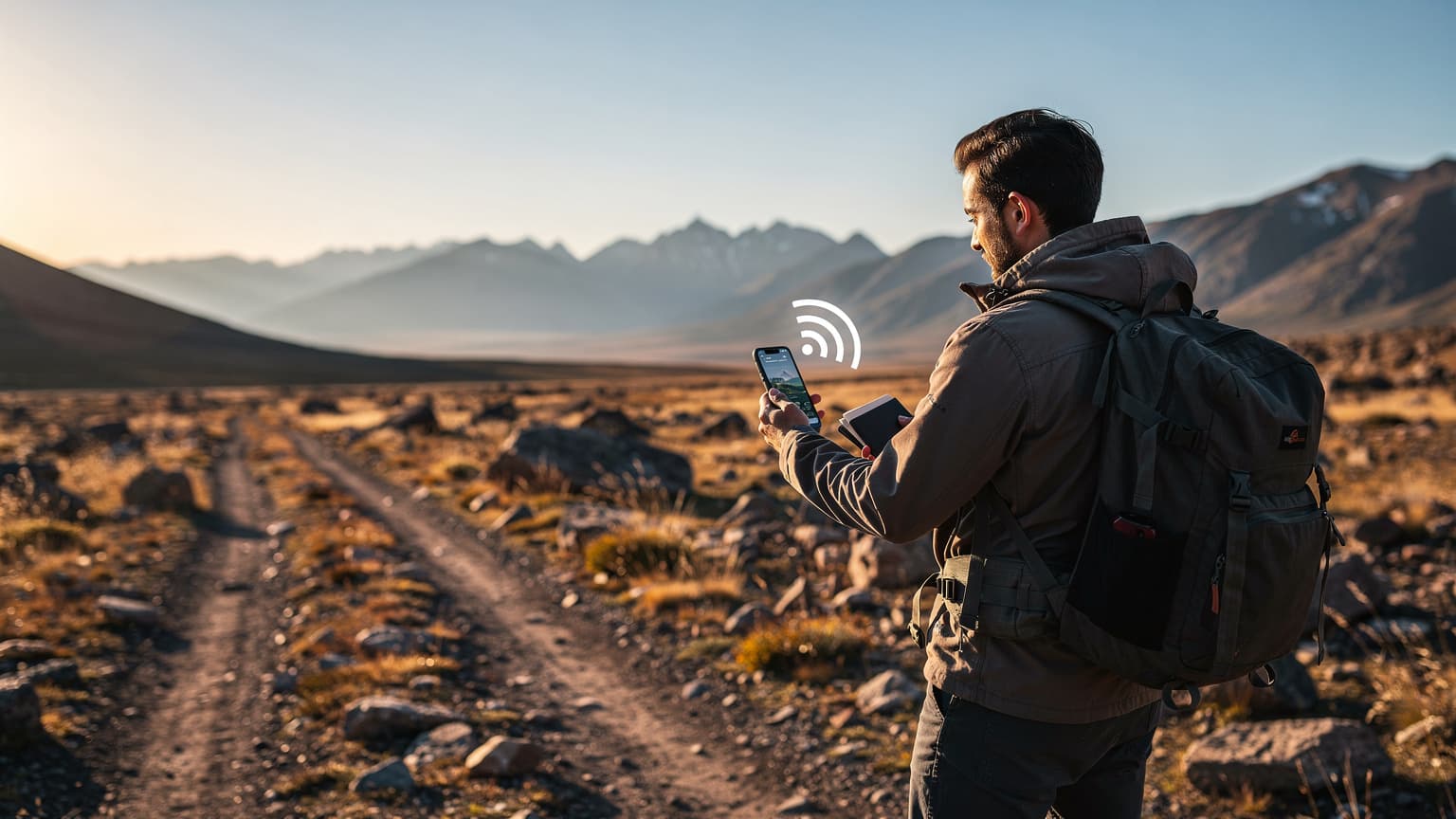
My fellow nomads in the WhatsApp groups are always swapping intel on these. “Did you try that 100MB freebie in Albania?” one might ask. “Yeah, lasted me about three tweets,” someone else would quip. The general consensus was that they were mostly marketing fluff, a taste that barely wet your whistle. But my job, trekking through places where even a faint GPRS signal feels like a miracle, means I can’t afford to dismiss any potential connectivity tool. So, I decided to put these free trials to a real-world test, not in a brightly lit co-working space like The Hub in Lisbon, but out where the cell towers are few and far between, on the literal edge of the map.
The goal wasn't to get by on free data forever, that's a fool's errand. It was to see if these trials offered enough to scout a location, to confirm if a specific carrier had any bars at all in a valley, or if a particular mountain hut had a sliver of data access. Think of it as a pre-expedition recon, a quick poke around before committing to a larger, paid plan.
The Difference Between Urban and Wilderness Connectivity
In a city, if your data drops, you just hop on the café Wi-Fi at say, the Blue Bottle in Shibuya, or tether off a friend. Out in the wilderness, there’s no Plan B. No street corner with a Wi-Fi hotspot. When I was deep in the Himalayas near Manali, for instance, even a WhatsApp message took ages to send. The stakes are higher, the margins thinner. This is where the true value, or utter uselessness, of a free trial would reveal itself.
What Exactly is a Free eSIM Trial, and Who Offers It?
At its core, a free eSIM trial is a small, limited data package offered by various eSIM providers, usually for a short duration or a minimal data allowance. It’s designed to give you a taste, a brief interaction with their service to assess compatibility and basic network performance. Think of it as a free sample at the supermarket: just enough to decide if you want to buy the full product, but not enough to make a meal.
Common Providers and Their Trial Offerings
There are quite a few players in the eSIM market, and many have jumped on the 'free trial' bandwagon. They vary wildly in their generosity and geographical reach.
| Provider Name | Typical Trial Offering | Geographic Scope (Examples) |
|---|---|---|
| Provider Alpha | 100 MB, 7 days | USA, UK, France, Germany |
| Provider Beta | 500 MB, 3 days | EU (select countries), Canada, Australia |
| Provider Gamma | 50 MB, 1 day | Global (very limited data) |
| Provider Delta | No data, 10 minutes talk, 5 SMS | Specific European nations |
It's worth noting that these trials often come with strict conditions. Some require you to already be in the country, others have specific device requirements. Always check the fine print, especially regarding activation windows and data expiry. And remember, these trials usually don't offer a phone number, which can be an issue if you need to register for local apps like some Brazilian banking services or India's Aadhaar authentication, which often demand a local, physical SIM number.
Why Companies Offer Free Trials
For the providers, it’s a customer acquisition strategy. They want you to experience the ease of eSIM activation and the reliability of their network, hoping you’ll convert to a paid plan. For us, the users, it’s a low-risk way to kick the tires. But for someone like me, who needs to know if I can get a signal to send a check-in message from a remote campsite, it’s a reconnaissance mission.
My Field Test Methodology, and Why It Matters
Testing free eSIM trials isn't just about speed tests. It's about real-world usability in situations where connectivity is not a luxury, but a necessity. My methodology for these trials is a bit more… hands-on than most, involving specific routines and locations designed to push the limits of network reliability.
The Testing Gear and Preparations
I always travel with two eSIM-compatible phones, usually an iPhone 18 and a Galaxy S26. This allows for simultaneous testing of different eSIMs or, more commonly, one free trial alongside a known reliable connection (my primary paid eSIM) as a benchmark. Before arriving in a new region, I download offline maps (OSMAnd+ is my go-to) and any critical communication apps. I also make sure my devices are fully charged and that I have a portable power bank, because a dead phone is useless, free trial or not.
The Actual Test Routine in the Wild
My routine is structured, almost ritualistic:
- Activation at Entry Point: I activate the free trial eSIM immediately upon landing or crossing a border. This tests initial connectivity in a relatively populated area, like an airport or border town, before heading out into the sticks.
- Signal Strength Mapping: As I travel towards my remote destination (often by local bus or hitchhiking), I continuously monitor signal strength using an app like Network Cell Info Lite. I log specific GPS coordinates where I gain or lose signal, noting the carrier.
- Basic Communication Test: Once I hit a potential dead zone, I attempt a simple WhatsApp text message, then a voice call, and finally, a small data download (like checking a weather forecast). This confirms actual usability, not just a theoretical signal.
- Speed and Latency Check: If I get a decent signal, I run a quick speed test (Ookla Speedtest is fine) to gauge bandwidth. This is less critical for emergency comms, but vital if I need to quickly upload a GPX track or download a detailed topo map.
- Battery Drain Observation: Poor signal strength forces devices to work harder, draining batteries faster. I note how quickly the free trial eSIM, struggling for a connection, impacts my phone’s battery life compared to a stable connection.
This methodical approach, far from the casual usage in a café with ubiquitous Wi-Fi, reveals the true grit of these free trials. It answers the fundamental question: when every signal counts, can these free trials actually deliver a usable connection?
Case Study: Patagonia, A Signal in the Wilderness
Patagonia, particularly the Argentinian side near El Chaltén, is breathtakingly beautiful but notoriously challenging for connectivity. I was scouting a new multi-day trekking route, and my usual strategy of buying a local Claro or Movistar SIM wouldn't work, as I needed to confirm a pickup point deep in the national park where a local SIM might not even register.
The Challenge of Remote Argentina
The nearest town, El Chaltén, has decent Wi-Fi at places like La Vineria, but even there, it's not always reliable. Once you leave the town limits and head into Los Glaciares National Park, cell service becomes a lottery. The monthly rent for a basic furnished apartment in El Chaltén runs about ARS 150,000-200,000 (roughly USD 150-200), and even with that, you’re often relying on satellite internet at home. The cost of living is manageable, but connectivity is a constant headache.
The Free Trial to the Rescue
I activated a 100MB, 7-day free trial from Provider Alpha, which claimed to use Claro's network in Argentina. My goal was simple: confirm if I could get enough signal to send an 'all-clear' message to my contact when I reached the planned pickup spot, a small ranger station about 30km from town. Local SIMs would typically demand an in-person registration with a passport, which I didn't want to waste time doing just for a test.
- Activation: Activated Provider Alpha's free trial eSIM easily while still in El Chaltén, connected to Claro 4G. Speed test showed 25 Mbps down, 8 Mbps up, perfectly adequate.
- Outbound Journey: As the bus rattled along Ruta Provincial 23, the signal bars slowly dwindled. At about 20km out, I dropped to 3G.
- Ranger Station Arrival: Upon reaching the ranger station, my phone, running the free trial, showed a single bar of H+ (HSPA+). Not much, but enough. I managed to send a short WhatsApp message to my contact, confirming the location and my arrival time. It took about 30 seconds to send, but it went through.
- Benchmarking: My primary paid eSIM, also on Claro, showed identical signal strength. This confirmed the free trial was indeed using the underlying network effectively.
This tiny, almost insignificant amount of data from the free trial saved me a potential day of uncertainty and ensured my safety. It proved that even a minimal free trial can be a vital scouting tool for off-grid safety and maps, especially when a physical SIM is inconvenient.
Case Study: Himachal Pradesh and the Aadhaar App Dilemma
My next stint took me to Himachal Pradesh, India, specifically around the Spiti Valley. I was planning a trek near Kaza, and connectivity up there is notoriously fickle. The local network is primarily BSNL, with some Airtel and Jio in more populated areas. The major hurdle in India, however, is that many critical apps, like banking apps or the Aadhaar authentication system (required for various government services and even some long-term rentals), demand a local Indian phone number linked to a physical SIM card for OTP verification.
Connectivity and App Limitations in India
In Leh, a common base for high-altitude treks, I often work from the German Bakery & Coffee Shop, where the Wi-Fi is surprisingly decent. But once you hit the Manali-Leh Highway, forget it. A monthly rent for a basic room in Leh can be around INR 5,000-8,000 (USD 60-100), but data costs can quickly add up if you're not careful. The real kicker, though, is the local SIM requirement for apps. While you can typically buy a local physical SIM, it often takes days to activate, a luxury I don't always have.
Testing a Free Trial for Data Only
I used a free eSIM trial from Provider Beta, offering 500MB for three days, operating on the Airtel network. My primary objective was to see if I could get any data signal along the treacherous roads leading to Kaza, specifically for weather updates and basic navigation. I knew it wouldn't solve the Aadhaar app issue, which explicitly needs a local number for SMS verification (a crucial detail for anyone planning a long stay in India). For that, you absolutely need a physical SIM from a local carrier. This is a common pain point in many countries, like Brazil, where some banking apps won't work without a local number.
- Initial Check: In Manali, the Provider Beta trial connected instantly to Airtel 4G, delivering solid speeds.
- Journey into Spiti: As the jeep climbed towards Rohtang Pass, the signal became intermittent. The free trial eSIM held a 3G signal longer than I expected, allowing me to check a few crucial weather reports from the India Meteorological Department.
- Kaza Area: Near Kaza, the trial eSIM picked up a faint BSNL 2G signal, which was barely enough for text-only WhatsApp messages. This was valuable intel: I now knew that any paid eSIM plan relying solely on Airtel would be useless here, and BSNL was the only option, albeit a slow one.
This trial confirmed two critical things: first, that Airtel coverage was limited beyond Manali, and second, that free trials are strictly data-only, offering no relief for local number-dependent apps. This is a vital distinction for anyone traveling to countries with strict local SIM requirements, something I always warn my friends about in our nomad groups.
The Fine Print: Gotchas and Limitations
As with anything 'free', there are always catches. Free eSIM trials are no exception. These aren't bottomless pits of data, and understanding their limitations is key to using them effectively without hitting a wall.
Data Caps and Expiry Windows
The most obvious limitation is the minuscule data allowance and short validity period. Most trials offer anywhere from 50MB to 500MB, usually valid for 1 to 7 days. This isn't meant for streaming or heavy browsing, but for quick tests, like checking why your eSIM shows no service or confirming an address. Once the data runs out or the time expires, that's it. No grace period, no warnings, just a sudden halt.
- Limited Data: Typically 50MB to 500MB, gone faster than a cheap street food meal.
- Short Validity: Usually 1 to 7 days, sometimes as little as 24 hours.
- No Rollover: Unused data vanishes.
- No Top-Ups: You can't add more data to a free trial. You have to buy a full plan.
Network Priority and Speed Throttling
Some providers might offer free trials on a 'best effort' basis, meaning you might not get the same network priority or speeds as paying customers. While I haven't seen explicit throttling on free trials in my tests (it's usually too little data to matter), it's a possibility. In congested areas, you might find your connection slower than someone with a full-priced plan. This is especially noticeable if you're trying to use it in a busy co-working space like Nomad House in Budapest, where the Wi-Fi is usually bulletproof anyway.
Device Compatibility and Activation Issues
Not all phones support eSIMs, and even compatible ones can sometimes be finicky. Older models or carrier-locked phones might not work. Always double-check your device's eSIM compatibility before relying on a trial. Activating an eSIM can also be a hurdle, sometimes requiring a stable Wi-Fi connection for the initial download, which is problematic if you're already in a remote area. For a comprehensive guide on modern device compatibility, check out iPhone 18 & Galaxy S26 eSIM: Your Global Travel Tech for 2026/2027.
I once saw a guy in a remote village in Azerbaijan struggle for three hours trying to activate an eSIM with a weak, public Wi-Fi signal. It was painful to watch. Lesson learned: activate your eSIM before you really need it, preferably on a strong, private connection.
How to Leverage Free Trials for Your Own Connectivity Scouting
Despite their limitations, free eSIM trials are a powerful tool if used strategically. They’re not about getting free data for your entire trip, but about smart reconnaissance. Think of it as a tactical advantage in the connectivity game.
Pre-Arrival Network Assessment
Before you even commit to a long-term destination, free trials can help you gauge the connectivity landscape. If you're considering a stay in, say, a rural part of the UK, you could activate a free trial for United Kingdom Travel Advisory 2026: Navigating Safety and Staying Connected from a provider that uses a major UK network like Vodafone or EE. If you consistently get poor signal, it's a clear indicator that you'll need to research alternative solutions or adjust your expectations.
Identifying Local Carrier Strengths and Weaknesses
Many eSIM providers partner with local carriers. A free trial usually tells you which local network it’s using. This is gold. If you find a trial performing well on 'Local Telco A' in a specific area, you know that buying a full plan that also uses 'Local Telco A' is a good bet. Conversely, if 'Local Telco B' through another trial is dead in the water, you know to avoid it. This is particularly useful in places like Africa, where network coverage can be highly localized, making Africa eSIM 2026: Multi-Country Connectivity for the Savvy Traveler a complex puzzle.
Emergency Backup for Short Stints
While not ideal, a free trial can serve as a bare-bones emergency backup for very short periods. If your primary eSIM fails, or your physical SIM gets damaged, having a pre-loaded free trial (even if minimal) means you might be able to send a quick emergency message or load a critical map section. It’s not robust, but it’s better than nothing when you’re truly stuck.
A Step-by-Step Guide to Using Free eSIM Trials Strategically
Here’s how I integrate free trials into my pre-expedition connectivity planning:
- Research Available Trials: Before I even pack, I check which eSIM providers offer free trials for my target region. I look for trials with the longest validity and largest data allowance, however small.
- Download and Install in Advance: I download and install the trial eSIM profile onto my secondary phone while I still have stable Wi-Fi at my previous location. This avoids activation headaches on arrival.
- Prioritize Coverage Over Speed: My primary metric for trials in remote areas isn't raw speed, but simply 'any signal at all'. Can I send a text? Can I load a basic web page? That's the win.
- Map Your Findings: I use a simple spreadsheet or a note-taking app to log my findings: location, carrier detected, signal bars, speed test results (if any), and whether a basic communication attempt was successful.
- Inform Your Purchase Decision: Use the intel gained from the free trial to guide your purchase of a full, paid eSIM plan for your trip. Don't just pick the cheapest; pick the one that worked in your test areas. For a general guide on eSIMs, consider checking out the company's FAQ page for more detailed information.
When Free Isn't Enough: Moving to Paid Plans
Let's be clear: free eSIM trials are a reconnaissance tool, not a sustainable solution for digital nomads. Once you've gathered your intel and confirmed which networks work for your specific needs, it's time to invest in a reliable paid plan.
The Value Proposition of Paid eSIMs
Paid eSIMs offer significantly more data, longer validity periods, and often better network priority. They provide the peace of mind that comes with knowing you have consistent, reliable connectivity. For someone who relies on constant communication, whether for work or safety, a paid eSIM is a non-negotiable expense.
| Feature | Free eSIM Trial | Paid eSIM Plan |
|---|---|---|
| Data Allowance | 50MB - 500MB | 1GB - 50GB+ |
| Validity Period | 1 - 7 days | 7 - 90 days+ |
| Network Priority | Variable, often lower | Standard, higher |
| Cost | Free | Starts at $5-$10 |
| Recharge/Top-up | No | Yes |
My general rule of thumb for budgeting data as a nomad is to factor in about $20-40 USD per month for a solid data plan, depending on the region and my usage. This is on top of my base cost of living, which, for a place like Chiang Mai, might be $600-800 USD for a decent apartment and food, or in a more expensive locale like Tallinn, Estonia, closer to $1200-1500 USD.
Selecting the Right Paid eSIM After Your Trial
Once you know which local carrier provides the best coverage in your target areas (thanks to your free trials), selecting a paid eSIM becomes much simpler. Look for providers that explicitly state their local network partners. For example, if Provider Alpha's free trial worked great on Claro in Argentina, then a paid eSIM for Argentina from a provider that uses Claro would be my next step.
Consider also the duration of your stay and your data needs. If you’re planning a multi-month stint, a larger data package that can be topped up is usually more cost-effective than repeatedly buying smaller plans.
The Future of eSIM Trials and Remote Connectivity
The landscape of remote connectivity is constantly evolving. As eSIM technology becomes more prevalent and satellite internet solutions like Starlink Mini become more accessible, the role of free eSIM trials might shift, but their fundamental utility as a scouting tool will likely remain.
Integration with Satellite Communication
I can envision a future where free eSIM trials are offered in conjunction with basic satellite communication capabilities, perhaps a limited number of satellite texts for truly off-grid zones. This would be a game-changer for safety in extreme environments. Imagine being able to send a quick 'I'm okay' message from a remote glacier where even the most robust cell tower won't reach.
Smarter Trials and Personalized Offers
Providers will likely get smarter about their trial offerings. Instead of generic 100MB, we might see trials tailored to specific regions, perhaps with a focus on areas known for challenging terrain, offering slightly more data or a longer validity. This would make them even more valuable for adventurers and digital nomads who frequently venture beyond typical tourist routes.
Ultimately, free eSIM trials, when approached with a clear objective and a healthy dose of skepticism, are a valuable addition to any long-stay nomad’s toolkit. They won't replace a solid paid plan, but they can significantly de-risk your initial foray into new, unknown territories, helping you stay connected when it truly matters.
Frequently Asked Questions
What is the primary benefit of using a free eSIM trial in remote areas?
The main benefit is to conduct a no-cost reconnaissance of network coverage and data speeds. This allows you to confirm if a specific carrier provides any usable signal in a challenging location before committing to a paid plan, which is crucial for safety and planning.
Do free eSIM trials usually include a local phone number?
No, free eSIM trials are almost exclusively data-only. They do not typically provide a local phone number, which is a significant limitation for services like local banking apps or government authentication systems (e.g., India's Aadhaar) that require SMS verification to a local number.
What kind of data allowance can I expect from a free eSIM trial?
Most free eSIM trials offer a very limited data allowance, typically ranging from 50MB to 500MB. They also come with short validity periods, usually between 1 to 7 days, so they are not suitable for extensive internet usage.
Can I top up or extend a free eSIM trial if I run out of data or time?
No, free eSIM trials generally cannot be topped up or extended. Once the data allowance is consumed or the validity period expires, the trial ends. To continue service, you would need to purchase a full, paid eSIM plan from the provider.
Are there any specific apps that require a local physical SIM, even if I have a working eSIM for data?
Yes, several critical apps, especially in countries like India (for Aadhaar) and Brazil (for certain banking services), require a local phone number linked to a physical SIM card for OTP verification or account registration. A data-only eSIM will not fulfill these requirements.
How can I strategically use a free eSIM trial to inform my paid eSIM purchase?
Use the trial to identify which local network partners (e.g., Claro, Airtel) offer the best coverage and speed in the specific areas you plan to visit. Then, when purchasing a paid eSIM, select a provider that explicitly partners with that proven local network for more reliable connectivity.